
Neck Pain and Cervical Spondylosis: Causes, Symptoms, and Treatment
Why your neck hurts, when tingling in the arm matters, and how to manage cervical spine problems safely.
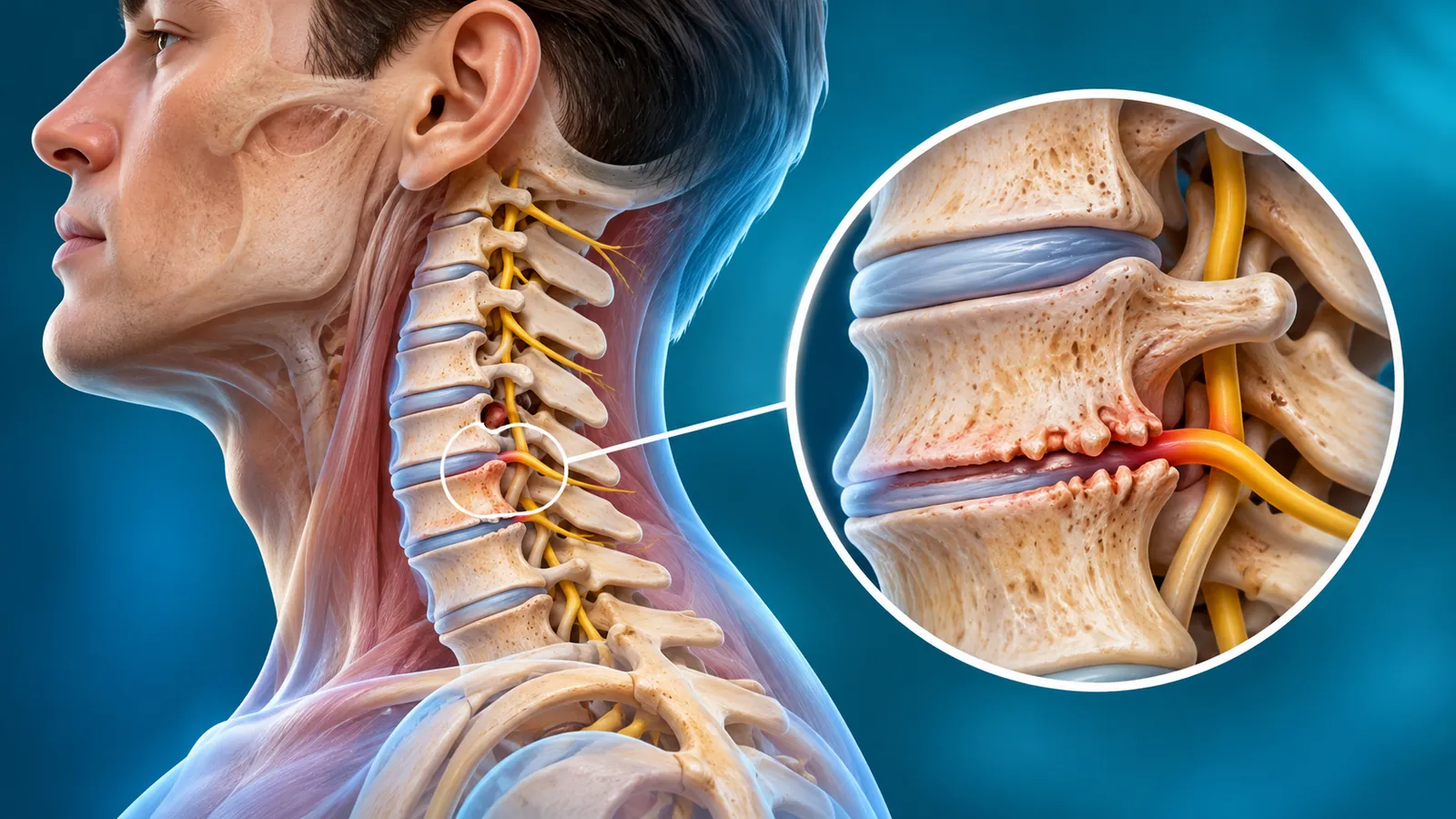
Neck pain is common among people who work at desks, use mobile devices, drive for long periods, or experience age-related spinal changes. A painful neck does not automatically mean a “slipped disc” or that surgery is required. Understanding the cause helps guide safe, effective treatment.
1What Is Cervical Spondylosis?
Cervical spondylosis refers to age-associated degenerative changes in the neck portion of the spine. Discs can lose height and hydration, and joints may develop bony overgrowths (osteophytes). These changes are common on imaging—even in people without pain. Symptoms arise when joints or other tissues become painful, or when a nerve root or the spinal cord is affected.
2What Causes Neck Pain?
Common causes include muscle strain, prolonged static postures, cervical facet-joint pain, disc degeneration, and cervical spondylosis. Neck pain can also follow a whiplash injury. Less commonly, infection, inflammatory disease, fracture, or cancer may be responsible. A neck X-ray showing degeneration does not, by itself, prove that spondylosis is causing the pain.
3Neck Pain vs Cervical Radiculopathy vs Myelopathy
Local neck pain typically causes aching, stiffness, and reduced movement. Cervical radiculopathy occurs when a nerve root is irritated or compressed, sometimes producing shooting arm pain, pins and needles, numbness, or weakness. Cervical myelopathy means spinal cord dysfunction and may cause hand clumsiness, difficulty with buttons or writing, balance problems, altered walking, or limb weakness. Myelopathy requires prompt specialist assessment.
4Who Is at Risk of Cervical Spondylosis?
Degenerative changes become more frequent with age. Previous neck injury, repetitive loading, smoking, and some occupational exposures may contribute. Long periods of screen use can aggravate muscular discomfort, but posture alone does not reliably predict spinal damage. Regular movement and comfortable work positioning are more useful than trying to maintain one “perfect” posture all day.
5When Is Neck Pain a Warning Sign?
Seek emergency assessment after major trauma or for rapidly progressive neurological weakness. Arrange urgent assessment for new hand clumsiness, walking imbalance, or suspected spinal cord symptoms. Fever, unexplained weight loss, a history of cancer, severe unrelenting pain, or other concerning systemic symptoms also warrant prompt evaluation. New bladder or bowel disturbance together with neurological symptoms should be assessed urgently.
6How Is Cervical Spondylosis Diagnosed?
A clinician evaluates the onset and distribution of pain, aggravating factors, sensation, strength, reflexes, neck movement, and walking or hand coordination when indicated. Routine imaging is often unnecessary for uncomplicated neck pain. MRI is particularly useful when spinal cord compression, progressive neurological deficits, or persistent radicular symptoms are suspected and results may influence management. Imaging findings must match the clinical picture.
7Can Neck Pain and Cervical Spondylosis Be Treated Without Surgery?
Yes. Most uncomplicated neck pain improves with non-surgical care. Helpful measures include remaining active, taking movement breaks, progressive neck and shoulder-girdle exercises, and physiotherapy tailored to the diagnosis. Heat or cold may provide temporary comfort. Non-steroidal anti-inflammatory drugs or other analgesics can be considered when medically appropriate; medication choice should account for kidney, gastrointestinal, cardiovascular, and other risks. Prolonged bed rest and routine use of a soft collar are generally discouraged.
8Simple Daily Habits That May Help
Position screens at a comfortable viewing height, support the forearms when practical, vary positions throughout the day, and avoid long uninterrupted periods of looking down. Use a pillow that keeps the neck comfortably supported rather than forcing an extreme angle. Start gentle range-of-motion and strengthening exercises gradually; stop and seek advice if an exercise produces worsening arm weakness or neurological symptoms.
9When Are Injections or Surgery Considered?
Some people with persistent cervical radicular pain may be offered specialist interventions after careful assessment. Injections have variable benefits and risks and are not a routine solution for every patient. Surgery may be recommended for progressive neurological deficits, clinically significant cervical myelopathy, or selected persistent nerve-root compression that has not improved sufficiently with appropriate non-surgical treatment. Surgery aims to decompress affected neural structures; it is not generally performed for ordinary age-related imaging changes alone.
10Can Cervical Spondylosis Be Prevented?
Age-related changes cannot be completely prevented. Nevertheless, regular physical activity, strength and mobility exercises, smoking cessation, adequate sleep, and sensible work habits support general spinal health. The goal is to maintain function and reduce symptoms—not to reverse every degenerative change visible on a scan.
Conclusion: Treat the Patient, Not Just the Scan
Neck pain and cervical spondylosis are common, but they are not interchangeable diagnoses. Most people benefit from education, activity, and tailored rehabilitation. Radiating arm pain merits neurological assessment, while hand clumsiness, gait changes, or progressive weakness may signal spinal cord involvement. Early recognition and individualised care help patients remain active and avoid unnecessary treatment.
Frequently asked questions
Is cervical spondylosis dangerous?
Usually it reflects common age-related changes. It becomes more concerning when associated with nerve-root or spinal cord dysfunction.
Can cervical spondylosis be cured permanently?
Degenerative imaging changes cannot generally be reversed, but symptoms and function often improve substantially with appropriate care.
Does neck pain always require MRI?
No. MRI is most useful when serious disease or neurological compression is suspected, or when the result would change treatment.
What is the best sleeping position for neck pain?
Choose a comfortable position with the neck supported in a relatively neutral alignment; no single position works for everyone.
When is surgery needed?
Usually for selected patients with spinal cord compression, progressive neurological problems, or persistent disabling nerve-root symptoms despite suitable treatment.
Scientific References and Patient Resources
- NICE. Neck pain — cervical radiculopathy. Clinical Knowledge Summaries. https://cks.nice.org.uk/topics/neck-pain-cervical-radiculopathy/
- NICE. Suspected neurological conditions: recognition and referral (NG127). https://www.nice.org.uk/guidance/ng127
- NHS. Cervical spondylosis. https://www.nhs.uk/conditions/cervical-spondylosis/
- NHS. Neck pain. https://www.nhs.uk/conditions/neck-pain-and-stiff-neck/
- Fehlings MG, et al. A clinical practice guideline for the management of patients with degenerative cervical myelopathy. Global Spine Journal. 2017;7(3 Suppl):70S–83S. https://doi.org/10.1177/2192568217701914
More from the Cepienta blog
- Spine
Herniated Disc: When Is Spine Surgery Necessary?
Does a herniated disc need surgery? Learn warning signs, sciatica treatments, MRI findings, microdiscectomy benefits, risks, and recovery timelines.
- Spine
Lower Back Pain: Causes, Treatment, and Exercises That Help
Lower back pain? Learn the common causes, warning signs that need a doctor, treatments that work and 8 simple exercises to ease pain and protect your back.
- Spine
Sciatica vs. Lower Back Pain: How to Tell the Difference, Recognise Symptoms, and Find the Right Treatment
An evidence-based guide to understanding back pain, sciatica symptoms, nerve compression, diagnosis, and treatment options.