
Herniated Disc: When Is Spine Surgery Necessary?
Symptoms, MRI diagnosis, non-surgical treatment, warning signs, microdiscectomy, and recovery — an evidence-based patient guide.
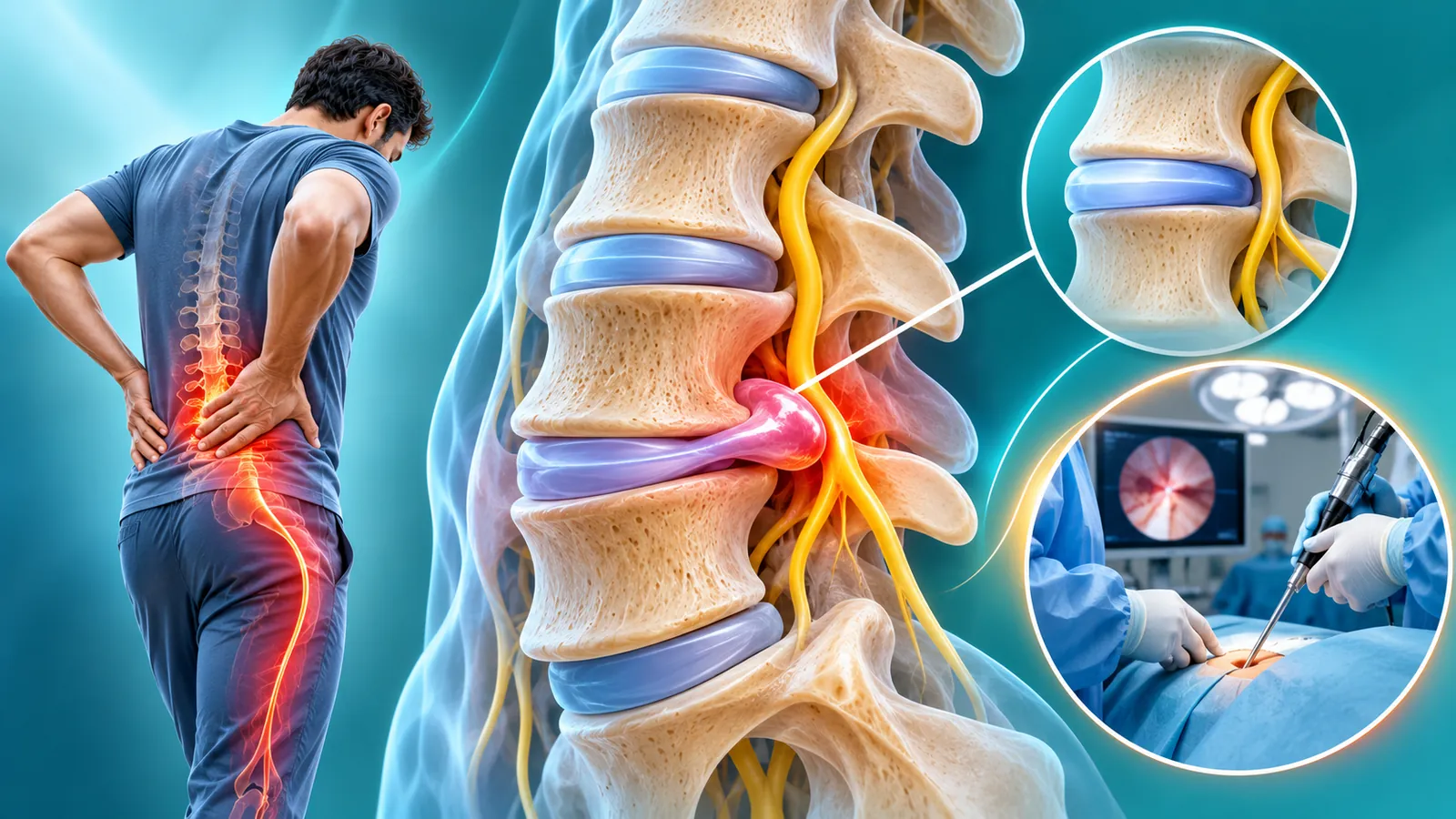
A herniated disc can cause sharp back pain, shooting pain down a leg, or tingling and weakness. Hearing the words “slipped disc” may make surgery sound inevitable. Fortunately, most people with uncomplicated lumbar disc herniation improve without an operation. The important question is when symptoms, neurological findings, and imaging make surgery the better option.
1What Is a Herniated Disc?
Intervertebral discs cushion the bones of the spine. Each disc contains a softer nucleus pulposus surrounded by a stronger annulus fibrosus. A herniation occurs when disc material extends beyond its usual boundary. When it irritates or compresses a nerve root, it may cause sciatica (lumbar radiculopathy). Herniated discs can also occur in the neck, causing arm symptoms; this article focuses primarily on lumbar disc herniation.
2What Symptoms Suggest Nerve Compression?
Symptoms can include pain radiating from the buttock down one leg, tingling, numbness, or weakness in a nerve-root distribution. Coughing, sneezing, or sitting may aggravate pain. Some patients have back pain without leg pain; others have severe leg pain with little back discomfort. The pattern and neurological examination matter more than MRI appearance alone.
3When Is a Herniated Disc an Emergency?
Seek emergency assessment for new urinary retention or loss of bladder/bowel control, numbness around the genitals or saddle area, or rapidly progressive neurological weakness. These may indicate cauda equina syndrome or severe neural compression. Fever, cancer history, significant trauma, or unexplained systemic illness also warrants prompt clinical review.
4Does Every Herniated Disc Need an MRI?
No. Routine early MRI is often unnecessary for uncomplicated back pain or sciatica. Imaging is appropriate when serious pathology is suspected, neurological deficits progress, or results would change treatment, including consideration of surgery. MRI abnormalities can also appear in people without symptoms; clinical and imaging findings must agree.
5Can a Herniated Disc Heal Without Surgery?
Many patients improve over weeks to months with activity modification, gradual movement, physical therapy, and individualised pain relief. Some disc herniations shrink on follow-up imaging through natural resorption. This does not guarantee symptom resolution, and persistent weakness or disabling pain requires reassessment. Prolonged bed rest is generally discouraged.
6Which Non-Surgical Treatments Help?
A tailored programme may include maintaining tolerable activity, exercise-based rehabilitation, advice about lifting and posture, and short-term medication when suitable. Non-steroidal anti-inflammatory medicines require consideration of kidney, stomach, cardiovascular, and other risks. For acute severe sciatica, a specialist may consider an epidural injection in selected cases. NICE advises against routinely using gabapentinoids, oral corticosteroids, or benzodiazepines for sciatica because overall benefit is lacking and harms are possible.
7When Is Spine Surgery Necessary?
Emergency decompression may be necessary for suspected cauda equina syndrome, and urgent specialist evaluation is appropriate for severe or progressive motor deficit. Elective surgery may be considered when persistent, disabling leg pain remains despite appropriate non-surgical treatment, examination findings support nerve-root compression, and MRI identifies a matching disc herniation.
A common decision point is around 6–12 weeks of persistent symptoms, but this is not a rigid waiting period. Severity, progression, work demands, quality of life, and patient preference influence timing. Surgery is generally more predictable for relieving nerve-related leg pain than isolated nonspecific low-back pain.
8What Operation Is Commonly Performed?
Lumbar microdiscectomy removes the disc fragment pressing on the affected nerve through a limited surgical approach. Endoscopic discectomy is an option in selected settings. The purpose is nerve decompression rather than replacement of the entire disc. Fusion is not routinely required for an uncomplicated first-time lumbar disc herniation.
| Treatment | Potential advantage | Important limitation |
|---|---|---|
| Structured rehabilitation | Avoids operative risks; many improve | Improvement may be gradual |
| Epidural injection | May provide short-term relief for selected severe sciatica | Does not reliably resolve mechanical compression |
| Microdiscectomy | Often provides faster relief of appropriately selected leg pain | Anaesthesia, infection, dural tear, recurrent herniation, or persistent symptoms |
9What Does Research Say About Surgery vs Rehabilitation?
Randomised and observational studies suggest that surgery can produce faster relief of leg pain in carefully selected patients with persistent sciatica. Over longer follow-up, differences between treatment strategies may narrow, partly because some patients initially assigned to non-surgical care later undergo surgery. The best decision depends on the severity and duration of symptoms, neurological status, imaging concordance, and individual priorities.
10How Long Is Recovery After Microdiscectomy?
Many patients walk on the day of surgery or soon afterwards, but return to work, driving, lifting, and sports depends on the procedure, symptoms, medication, and surgeon advice. Leg pain may improve early, whereas numbness or weakness can recover more slowly or incompletely. Rehabilitation should progress gradually, with attention to wound healing and safe movement.
11What Are the Risks of Spine Surgery?
Possible complications include infection, bleeding, dural tear with cerebrospinal fluid leakage, nerve injury, blood clots, persistent symptoms, and recurrent disc herniation. Risks differ across patients and procedures. An informed discussion should cover likely benefit, alternatives, recovery expectations, and the possibility that surgery will not eliminate every symptom.
12Questions to Ask Your Spine Surgeon
- Does my MRI finding match my symptoms and examination?
- Is there any urgent neurological concern?
- What is the likelihood that my leg pain will improve without surgery?
- Which procedure is proposed, and why?
- What are the risks, recurrence chances, and expected rehabilitation plan?
Conclusion: Surgery Is for the Right Patient, at the Right Time
A herniated disc does not automatically require spine surgery. Many patients recover with appropriate non-surgical care. Surgery becomes more relevant when nerve compression causes emergency symptoms, progressive weakness, or persistent disabling sciatica despite treatment. Matching the clinical picture to the imaging findings—and making a shared, informed decision—is the key to effective care.
Frequently asked questions
Can a herniated disc shrink naturally?
Yes. Some herniations decrease in size over time, although symptoms and recovery vary.
Is surgery needed if an MRI shows a large disc bulge?
Not necessarily. Symptoms, neurological findings, and MRI concordance determine management.
Does microdiscectomy cure all back pain?
No. It primarily targets nerve-root-related leg pain.
Can weakness recover after surgery?
It may, but recovery depends on severity and duration of nerve dysfunction.
When should I go to the emergency department?
New bladder or bowel dysfunction, saddle numbness, or rapidly worsening weakness require immediate assessment.
Scientific References and Clinical Resources
- NICE. Low back pain and sciatica in over 16s: assessment and management (NG59). https://www.nice.org.uk/guidance/ng59
- American Academy of Orthopaedic Surgeons. Herniated Disk in the Lower Back. https://orthoinfo.aaos.org/en/diseases--conditions/herniated-disk-in-the-lower-back/
- Peul WC et al. Surgery versus prolonged conservative treatment for sciatica. N Engl J Med. 2007;356:2245–2256. https://doi.org/10.1056/NEJMoa064039
- Weinstein JN et al. Surgical vs nonoperative treatment for lumbar disk herniation: SPORT. JAMA. 2006;296:2441–2450. https://doi.org/10.1001/jama.296.20.2441
- North American Spine Society. Diagnosis and Treatment of Lumbar Disc Herniation with Radiculopathy. https://www.spine.org/Research-Clinical-Care/Quality-Improvement/Clinical-Guidelines
More from the Cepienta blog
- Spine
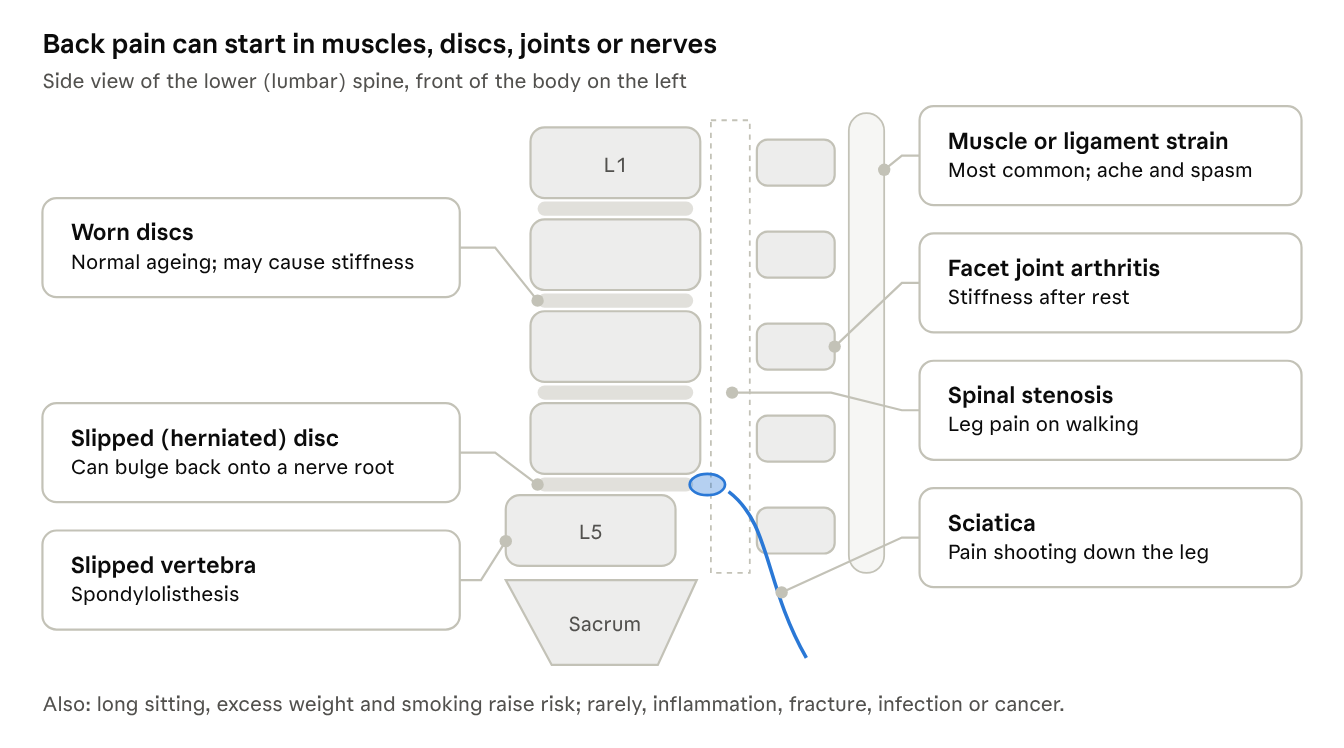
Lower Back Pain: Causes, Treatment, and Exercises That Help
Lower back pain? Learn the common causes, warning signs that need a doctor, treatments that work and 8 simple exercises to ease pain and protect your back.
- Spine
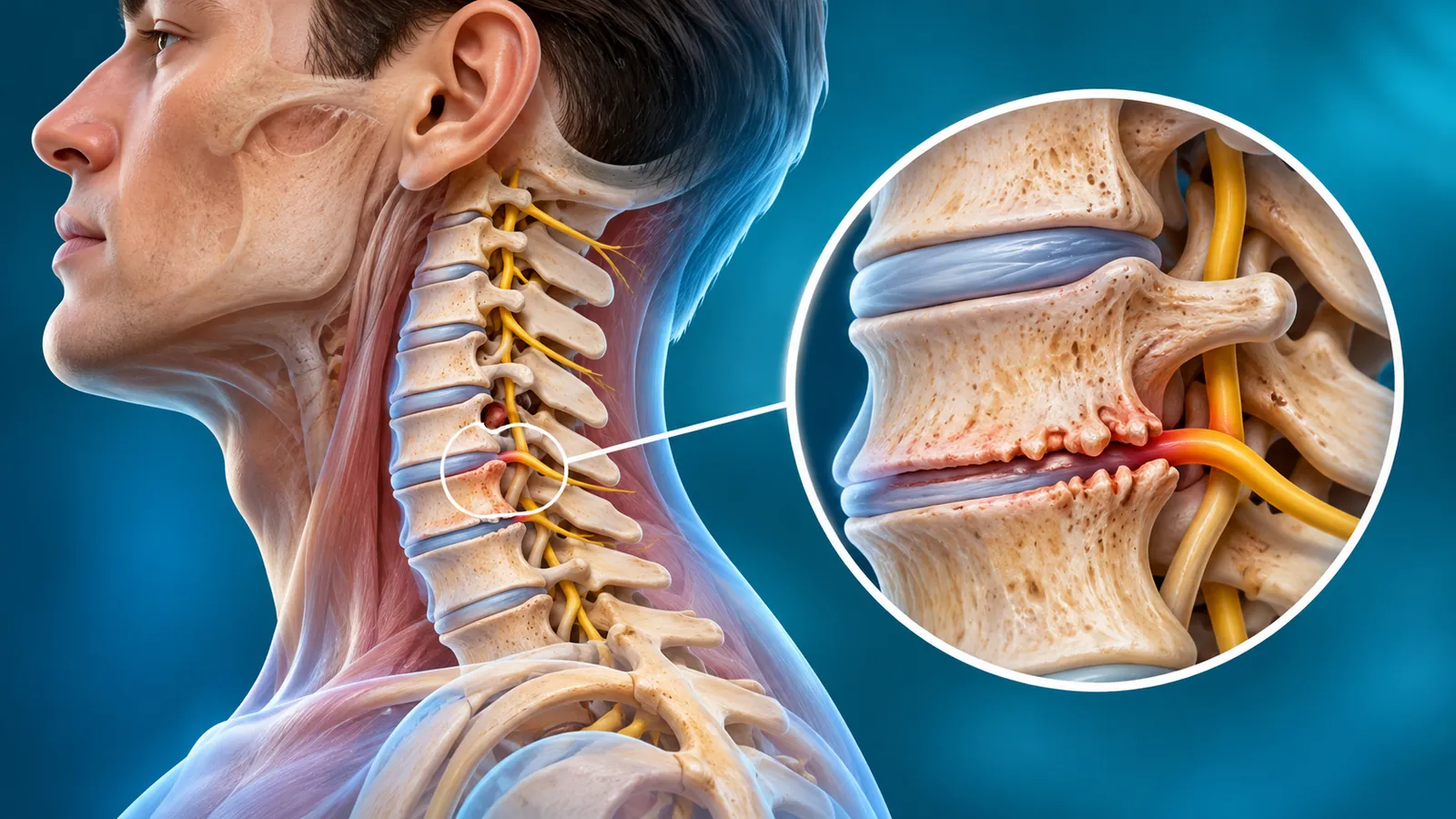
Neck Pain and Cervical Spondylosis: Causes, Symptoms, and Treatment
Neck pain or cervical spondylosis? Learn the causes, symptoms, nerve compression warning signs, exercises, treatments and when surgery may be needed.
- Spine
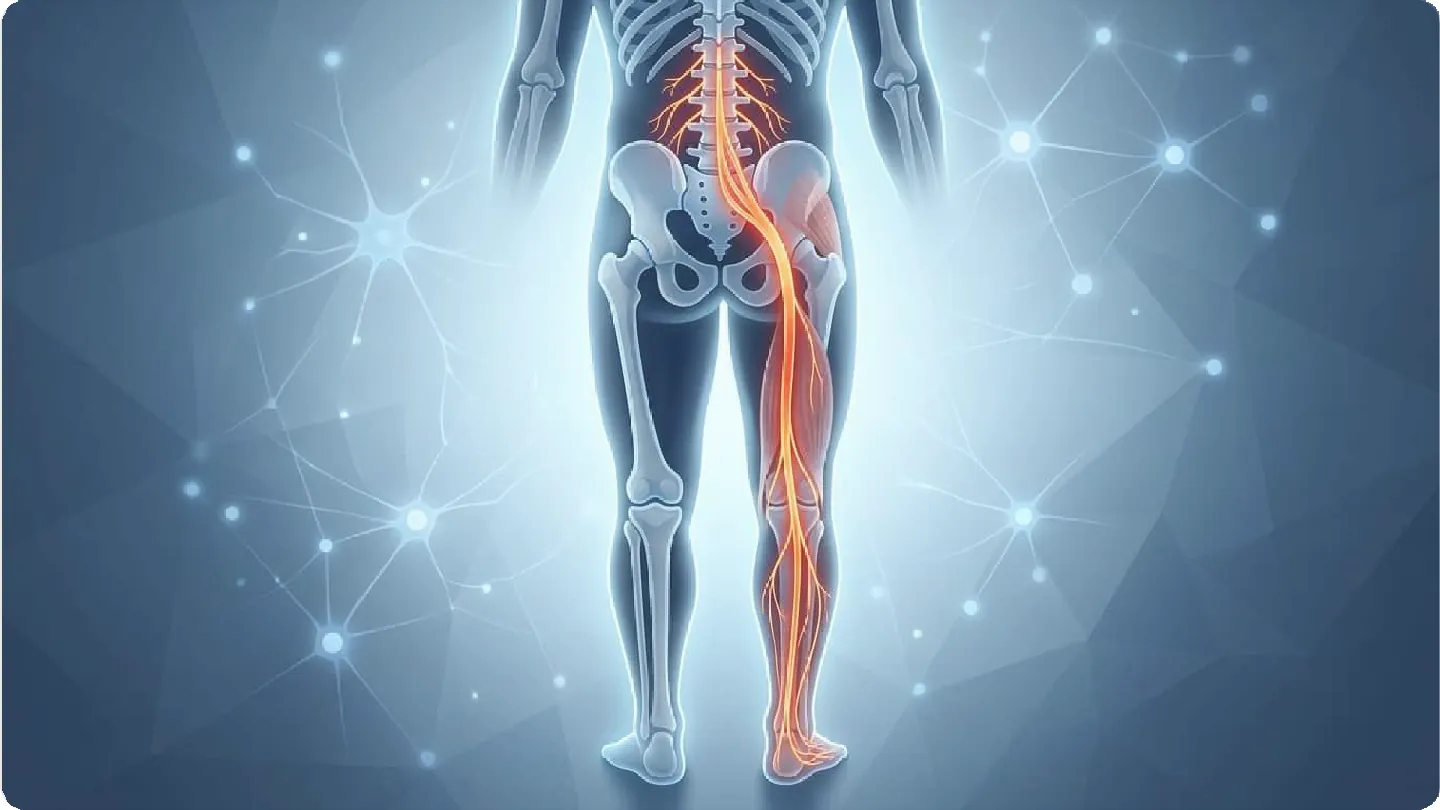
Sciatica vs. Lower Back Pain: How to Tell the Difference, Recognise Symptoms, and Find the Right Treatment
An evidence-based guide to understanding back pain, sciatica symptoms, nerve compression, diagnosis, and treatment options.