
Meniscus Tear: Does Every Patient Need Surgery?
When physiotherapy is enough, when arthroscopy may help, and how to choose the right treatment.
A painful knee, an MRI report showing a meniscal tear, and a recommendation for surgery can feel alarming. Yet a meniscal tear does not automatically mean an operation is necessary. Many people improve with targeted exercise and time; others benefit from early specialist assessment, particularly when a torn fragment physically blocks knee movement. The right choice depends on the type of tear, symptoms, knee function and patient goals.
1What is a meniscus tear?
The knee has two menisci—medial and lateral—made of fibrocartilage. They distribute load, absorb shock and contribute to stability. A tear may occur suddenly during twisting or develop gradually as the tissue changes with age. Meniscal tears are common on MRI, including in people without knee pain; an imaging finding must therefore be interpreted alongside symptoms and examination.
2What are the common symptoms?
- Pain along the inner or outer joint line, often aggravated by twisting, squatting or deep bending.
- Swelling, stiffness, clicking or catching; these symptoms are not unique to meniscal injury.
- Difficulty fully straightening the knee. A true locked knee—an actual mechanical block—requires prompt assessment.
- A feeling of instability, particularly when an associated ligament injury is present.
3Traumatic versus degenerative tears: why the difference matters
A traumatic tear typically follows a distinct injury, especially in a younger or athletic patient. A degenerative tear often develops without a single memorable incident and may coexist with knee osteoarthritis. The evidence for treatment differs: randomised trials strongly support exercise-based care as the initial approach for many degenerative tears, whereas some acute, displaced or repairable traumatic tears require a different discussion.
| Feature | Traumatic tear | Degenerative tear |
|---|---|---|
| Typical onset | Twisting or sporting injury | Gradual or minor event |
| Common context | Athletes; sometimes ACL injury | Middle-aged or older adults; arthritis may coexist |
| First approach | Depends on stability, displacement and associated injuries | Usually structured non-surgical management |
| Early surgery consideration | Displaced/locked or repairable tears in selected patients | Rarely needed solely for MRI tear |
4Can a meniscus tear heal without surgery?
Some tears near the outer, better-vascularised region have greater biological healing potential than tears in the poorly vascularised inner region. However, symptom improvement does not always mean that the torn tissue has anatomically healed. Many patients function well despite a persistent MRI-visible tear. The practical goals are pain relief, stable movement and return to valued activities—not simply a normal-looking scan.
5What does research say about avoiding surgery?
In adults with degenerative meniscal tears, several randomised studies found that exercise-based physical therapy produces patient-reported outcomes comparable to arthroscopic partial meniscectomy over follow-up. The five-year ESCAPE trial supported physical therapy as a preferred initial strategy in suitable patients aged 45–70. The FIDELITY sham-surgery trial also found no clinically important benefit of arthroscopic partial meniscectomy over placebo surgery for degenerative tears in its studied population. These findings should not be applied indiscriminately to an acutely locked knee or all traumatic tears.
6When might meniscus surgery be necessary?
Prompt orthopaedic evaluation is important for a true locked knee, a displaced bucket-handle tear, substantial traumatic injury, or an associated ligament injury. Arthroscopic repair may be considered when the tear is repairable and preserving tissue is feasible. Surgery can also be discussed after a sufficient trial of well-delivered rehabilitation if pain and functional limitation persist and the symptoms plausibly arise from the meniscal lesion. Shared decision-making should account for age, arthritis, tear characteristics and expectations.
7Meniscus repair versus partial meniscectomy
Meniscus repair uses sutures or fixation devices to preserve the torn tissue and, when healing occurs, may help maintain long-term load distribution. Partial meniscectomy removes only the unstable damaged portion that cannot be preserved. Although symptoms may improve after either procedure, tissue removal reduces meniscal volume and is associated with greater long-term joint-loading concerns. Surgeons generally aim to preserve as much functional meniscus as possible when clinically appropriate.
| Aspect | Meniscus repair | Partial meniscectomy |
|---|---|---|
| Main aim | Preserve and heal tissue | Remove unstable damaged fragment |
| Rehabilitation | Often more protective and prolonged | Usually faster early progression |
| Return to sport | Frequently around 4–6+ months; varies | Often weeks to months; varies |
| Key limitation | Tear may fail to heal | Permanent tissue loss |
8Physiotherapy and a realistic recovery timeline
A rehabilitation programme commonly combines swelling control, restoration of knee extension, progressive quadriceps and hip strengthening, balance work, and gradual return to running or sport. Symptoms and functional testing should guide progression. Recovery may be slower when osteoarthritis or another knee injury is present. Postoperative rehabilitation differs substantially after repair versus meniscectomy and must follow the surgeon’s protocol.
9What happens if you delay or avoid surgery?
For many degenerative tears, an initial period of rehabilitation is appropriate and does not mean neglecting the injury. Persistent pain, recurrent swelling, repeated giving-way episodes or a blocked knee should prompt reassessment. Avoid repeatedly forcing a painful knee through twisting or deep loaded flexion during the acute stage. Importantly, arthroscopy is not a guaranteed prevention strategy for osteoarthritis, and removing meniscal tissue may compromise long-term joint protection.
10Warning signs: when to seek urgent care
Seek urgent assessment for a knee that cannot be straightened after injury, inability to bear weight following significant trauma, major deformity, or new numbness or circulatory changes in the foot. A hot, swollen knee with fever also needs prompt evaluation for possible infection. Severe calf swelling, chest pain or breathlessness after an injury or operation requires urgent medical attention.
Conclusion: treat the patient, not the MRI
No—every patient with a meniscus tear does not need surgery. For many degenerative tears, physiotherapy is an effective first-line treatment. Some traumatic, displaced or persistently symptomatic tears may benefit from arthroscopic repair or carefully selected surgery. The best decision combines the patient’s symptoms and goals with examination findings, tear characteristics, and an informed discussion of benefits, risks and recovery.
Frequently asked questions
Can I walk with a torn meniscus?
Often yes, if weight bearing is comfortable and the knee is not locked. Modify painful activity and obtain assessment after a significant injury.
Can a meniscus tear heal naturally?
Some peripheral tears have healing potential, but many patients improve functionally without proven anatomical healing.
Is a meniscus tear always visible on MRI?
MRI is useful but imperfect; diagnosis requires correlation with clinical findings.
Will a meniscus tear cause arthritis?
Meniscal injury and tissue loss can be associated with osteoarthritis risk, but outcomes vary and arthritis is multifactorial.
Is arthroscopy better than physiotherapy?
For many degenerative tears, trials have not demonstrated a meaningful long-term advantage of partial meniscectomy over structured exercise therapy.
Scientific references
- van de Graaf VA, et al. Effect of Early Surgery vs Physical Therapy on Knee Function Among Patients With Nonobstructive Meniscal Tears. JAMA. 2018;320:1328–1337. doi:10.1001/jama.2018.13308.
- Noorduyn JCA, et al. Effect of Physical Therapy vs Arthroscopic Partial Meniscectomy in People With Degenerative Meniscal Tears: Five-Year Follow-up of the ESCAPE Randomized Clinical Trial. JAMA Netw Open. 2022;5:e2220394. doi:10.1001/jamanetworkopen.2022.20394.
- Sihvonen R, et al. Arthroscopic Partial Meniscectomy versus Sham Surgery for a Degenerative Meniscal Tear. N Engl J Med. 2013;369:2515–2524. doi:10.1056/NEJMoa1305189.
- American Academy of Orthopaedic Surgeons. Acute Isolated Meniscal Pathology Clinical Practice Guideline. 2024. https://www.aaos.org/quality/quality-programs/lower-extremity-programs/acute-isolated-meniscal-pathology/
- British Medical Journal Rapid Recommendations. Arthroscopic surgery for degenerative knee arthritis and meniscal tears: a clinical practice guideline. BMJ. 2017;357:j1982. doi:10.1136/bmj.j1982.
More from the Cepienta blog
- Knee
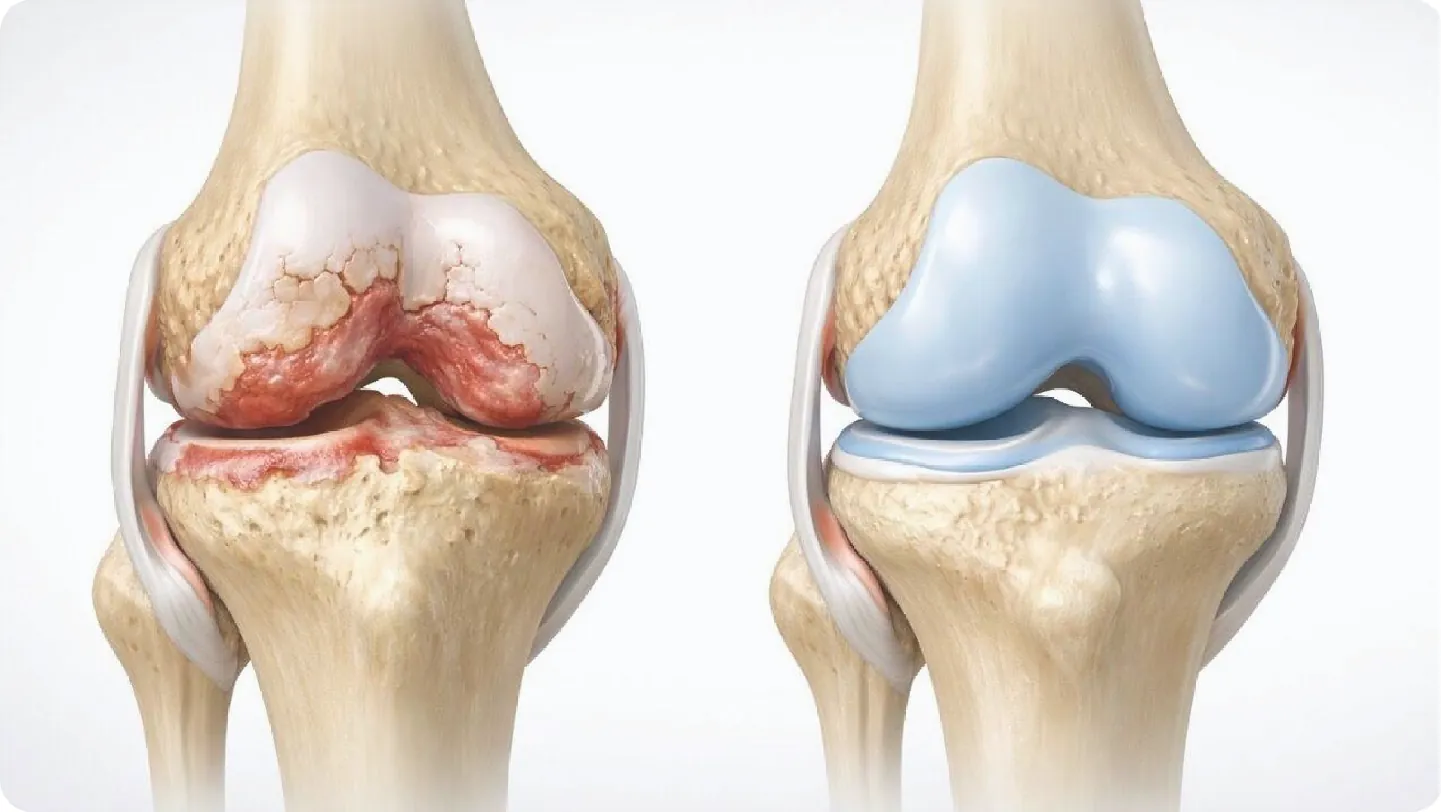
Knee Osteoarthritis: Can You Avoid Surgery? Evidence-Based Treatments That Really Work
An evidence-based guide to non-surgical knee osteoarthritis treatment, pain relief, joint preservation, and when knee replacement may be necessary.
- Knee
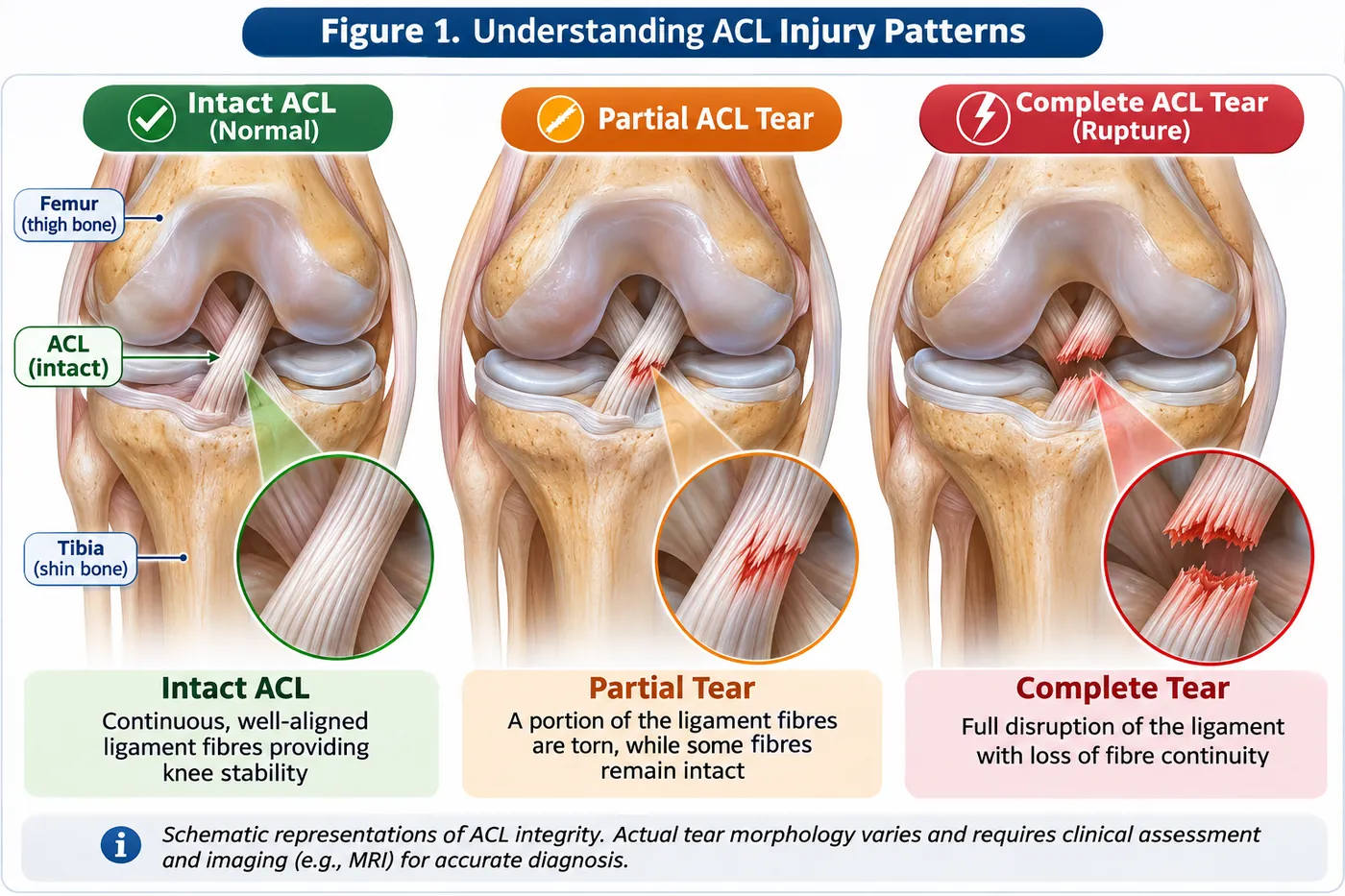
ACL Tear: Can It Heal Without Surgery?
Can a torn ACL heal without surgery? Explore ACL healing, physiotherapy, recovery timelines, scientific evidence, and when reconstruction is necessary.
- Knee

PRP Injections for Knee Arthritis: Do They Really Work?
Do PRP injections help knee arthritis? Explore the latest evidence, benefits, risks, cost considerations, and whether PRP can regrow cartilage.